


Feel the wind on your face, hear the sound of snow beneath your skis, feel the warmth of the sun at the top of a run… Skiing brings a unique sense of freedom — and now, it’s within everyone’s reach!
This page is for anyone who wants to discover or better understand adaptive skiing. You will find practical and helpful tips, as well as inspiring examples to help you get familiar with this accessible winter activity.
40 +evaluations
13regions
35stations with accessible services
47%of people with disabilities in Québec take part in outdoor sports activities
Adaptive skiing is a space where differences become strengths. For some, it’s a return to a passion set aside after an accident. For others, it’s the discovery of a world they once thought unreachable. Every run is a gift. Proof that the mountain belongs to everyone.
And what stands out most is the emotion the sport brings. A burst of laughter after a well-executed turn. A joyful shout at the bottom of the slope. A knowing glance between a student and their instructor.
Adaptive skiing allows people with disabilities to enjoy a winter sport in an inclusive and safe way. Although this activity is still not widely practiced, many organizations are expanding initiatives to make the slopes more accessible. Because for skiers, the goal is always the same: to experience the mountain, their way.
Adaptive skiing is an inclusive sport. It adjusts to each person’s needs and abilities. Thanks to specialized equipment, everyone can enjoy the thrill of gliding. Here are the main types used in Québec.
Sit-skiing is the most common option for people with reduced mobility. The skier sits in a molded seat fixed to one or two skis. They steer by shifting their body weight.
With an instructor or independently, sit-skiers rediscover the same sense of freedom as traditional skiing.
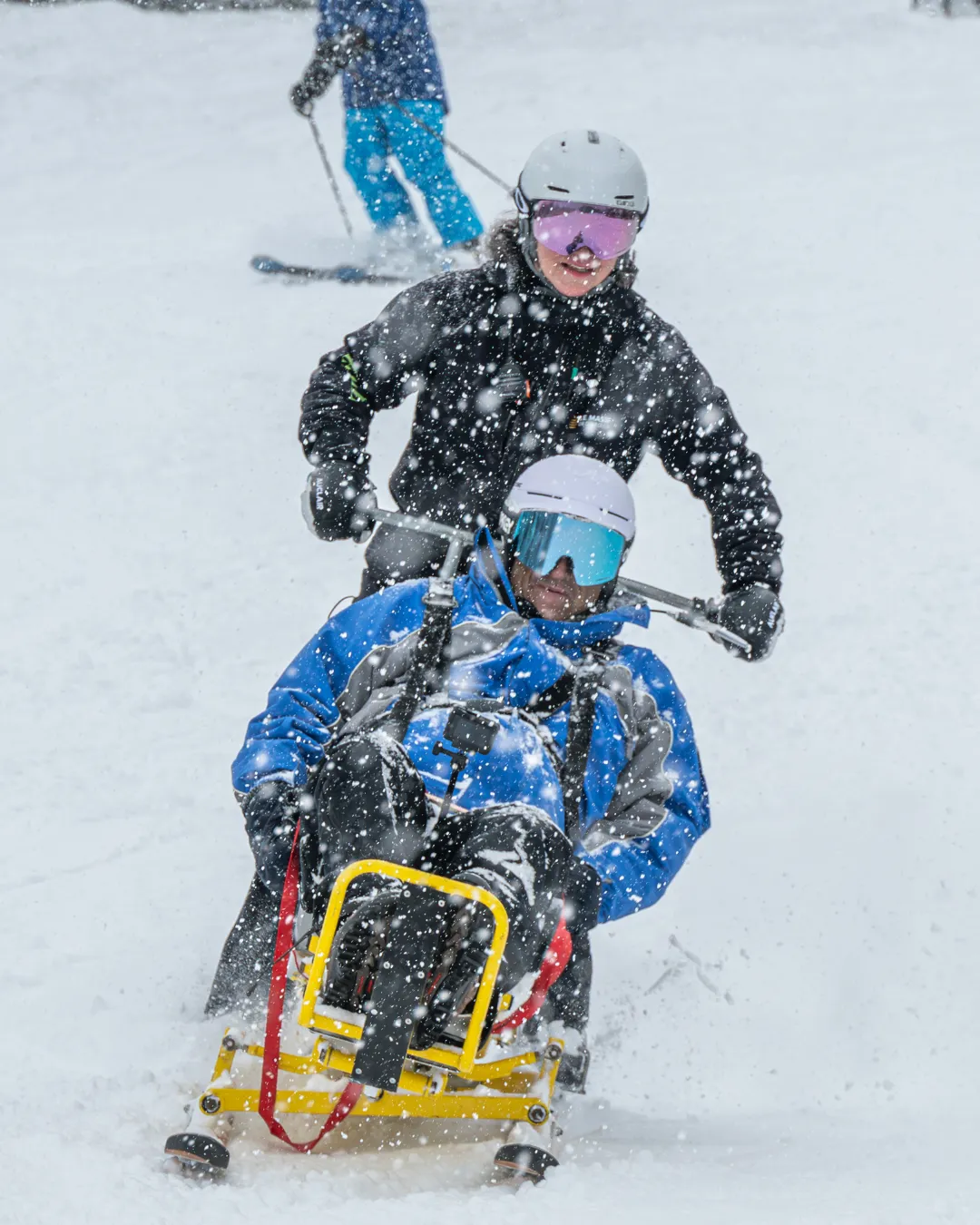
The tandem ski is designed for people who cannot or prefer not to steer themselves. The skier sits in a rigid seat mounted on two skis, while an instructor controls the direction using a rear handlebar.
Often used for people with very limited mobility or significant cognitive challenges, it relies on strong trust between participant and instructor.
A newer version, the Tandem’Flex, features articulated suspension for a smoother and more comfortable ride. Its stability allows more people to enjoy the mountain safely.
Outriggers (stabilizers) are poles with small skis at the end. They provide extra support while skiing upright, helping maintain balance and control turns.
Often used by people with limb weakness or amputation, they help preserve both safety and the joy of skiing.
For neurodivergent individuals and/or people with visual impairments, no specialized equipment is required, but adapted guiding is essential.
Instructors use clear verbal cues, gestures, or sound signals to ensure a smooth and safe descent, always adjusted to the participant’s abilities and confidence.
Thanks to the commitment of these organizations, adaptive skiing continues to grow and become more accessible across Québec.
Makes snow sports accessible in Québec in partnership with several resorts.
A national network that trains instructors and promotes inclusive adaptive skiing.
Present across Québec, they support the development of adapted recreation and sports activities.
Offers skiing and outdoor programs for people with visual impairments.
Supports resorts and local associations in implementing adaptive ski programs.
The key to a successful adaptive skiing experience? Planning.
Before you arrive, get informed: Is on-site support available? Where are the restrooms, and are they accessible? Should you bring a lunch because the cafeteria is not yet adapted? Do you need someone to assist you during your visit?
With a little organization (and sometimes a bit of creativity), everything becomes possible.
Some come with a loved one, others with a volunteer or an instructor: all enjoy the mountain in their own way. But at the top of a run, the feeling is the same for everyone — being free and alive.
So, ready to hit the slopes?
Kéroul accessibility ratings are assigned following on-site visits that assess tourism buildings and infrastructure. They serve as a reliable guide to help plan activities according to individual needs.
A rating of “Not Accessible” does not mean that skiing is impossible there. It mainly reflects the physical accessibility of the facilities, not the adaptive skiing experience offered on site.
Some resorts offer programs or trained instructors, even if their facilities do not yet meet all accessibility criteria. Before heading out, it is best to check directly with the resort.
Valuable information to help you plan your trip.


